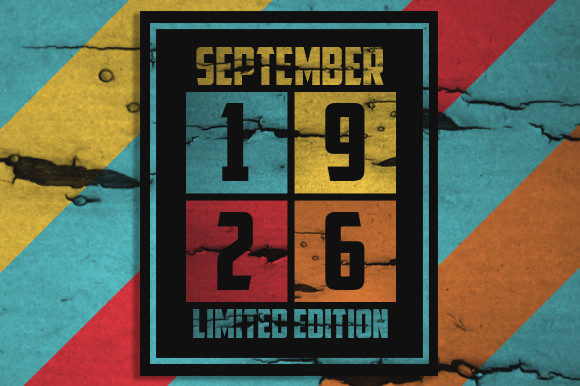
Retro September 1926 Limited Edition
As a designer and embroidery product reviewer, I’ve seen my fair share of digital files. But when I came across the Retro September 1926 Limited Edition, it immediately caught my attention. This isn’t just another design—it’s a piece of history wrapped in a modern digital format. The first thing that struck me was the mood. It feels vintage, nostalgic, and subtly sophisticated. The design has a timeless quality that makes it feel right at home on everything from custom apparel to handmade gifts.
The First Impression: A Design That Speaks Volumes
Looking at the Retro September 1926 Limited Edition, the visual personality is clear. It’s a clean, elegant design with a retro flair. The layout is balanced, and the details are sharp enough for high-resolution embroidery but not so intricate that they’ll overwhelm smaller hoop sizes. The theme is subtle—no bold statements, just a quiet elegance that suggests craftsmanship and care. It’s the kind of design that could work as an embroidered patch, a tote bag design, or even a holiday gift tag.
This design seems to belong to projects that value simplicity and sophistication. It’s not flashy, but it has a presence. If you’re looking for something that can be used in both personal and commercial settings, this could be a solid choice.
Real-World Embroidery Performance
I tested the Retro September 1926 Limited Edition on several fabrics to see how it would perform in real-life embroidery situations. On cotton t-shirts and sweatshirts, it looked great. The stitch density was appropriate, and the design didn’t require excessive stabilizer. However, I noticed that on thin or stretchy fabrics, the design could lose some definition if not properly stabilized.
For custom apparel, this design works well as a front or back embroidery. It’s also a good fit for baby items, like onesies or blankets, where softness and clarity matter. On caps or hats, it might need some adjustments depending on the hoop size and fabric texture. If the design is going to be on a curved surface, it’s worth testing first to ensure the stitching doesn’t distort.
One thing to note: the design has some fine details that could be lost on small hoop sizes. If you’re working with a limited hoop space, consider scaling the design or simplifying parts of it. For applique designs or satin stitch areas, the Retro September 1926 Limited Edition holds up well, but keep an eye on thread color contrast to make sure the design stands out on different backgrounds.
Where to Use It Carefully
While the Retro September 1926 Limited Edition is versatile, there are some scenarios where caution is needed. On dark fabrics, the design may not show up as clearly unless you use a contrasting thread color. For textured or stretchy fabrics, the design might not lay flat as intended. If you’re planning to use it on a layered garment or a product that will be washed frequently, make sure the stitching is secure and the stabilizer is adequate.
Small details, like tiny lettering or intricate corners, could be challenging. If you’re using this design for personalized gifts or custom apparel, test it on scrap fabric first. Also, check whether it works for both personal and commercial projects. While the file is a digital download, always confirm the licensing terms before selling finished products or digital assets.
Impact on Visual Appeal and Customer Trust
The Retro September 1926 Limited Edition adds a touch of class to any project. Its clean lines and vintage feel make it stand out in a crowded market. For small business owners or Etsy sellers, this design could help elevate your product listings. It’s the kind of design that customers notice and remember, especially when used in handmade products or personalized gifts.
From a branding perspective, this design is consistent and professional. It fits well into boutique products, craft fair items, or printable mockups. If you’re looking to create a cohesive look for your shop, this could be a valuable addition to your design assets. It also enhances the perceived value of your finished product, making it more appealing to buyers who appreciate quality and detail.
Practical Designer Notes
Before jumping into a full project, here are a few things to keep in mind. Test the Retro September 1926 Limited Edition on scrap fabric to see how it looks in real life. Check the thread color contrast, especially if you’re using it on dark or light backgrounds. Review the stitch density to ensure it’s suitable for your project type. Confirm the hoop size required and make sure it matches your machine’s capabilities.
Inspect small details closely. If the design includes tiny lettering or decorative accents, make sure they’re clear and legible. Test it in black and white mockups to see how it translates without color. Use the right stabilizer for your fabric type, and always double-check the licensing terms before selling finished items or digital products.
This design is ideal for craft businesses, Etsy sellers, and small shop owners looking for reliable, high-quality embroidery files. It’s also a great choice for anyone interested in creating personalized gifts, custom apparel, or holiday-themed items.
Final Thoughts: A Timeless Addition to Your Design Toolkit
The Retro September 1926 Limited Edition is more than just a digital file—it’s a design that can enhance your embroidery projects and add value to your handmade products. Its classic aesthetic and practical performance make it a strong contender for a wide range of applications. Whether you’re working on a custom tote bag, a baby item, or a holiday gift, this design has the potential to impress.
As with any embroidery file, it’s important to approach it with care and consideration. But if you take the time to test it and understand its strengths and limitations, the Retro September 1926 Limited Edition could become a go-to design for your next project.